
𝘍𝘰𝘤𝘶𝘴 𝘪𝘴 𝘢 𝘮𝘢𝘵𝘵𝘦𝘳 𝘰𝘧 𝘥𝘦𝘤𝘪𝘥𝘪𝘯𝘨 𝘸𝘩𝘢𝘵 𝘵𝘩𝘪𝘯𝘨𝘴 𝘺𝘰𝘶’𝘳𝘦 𝘯𝘰𝘵 𝘨𝘰𝘪𝘯𝘨 𝘵𝘰 𝘥𝘰.
John Carmack

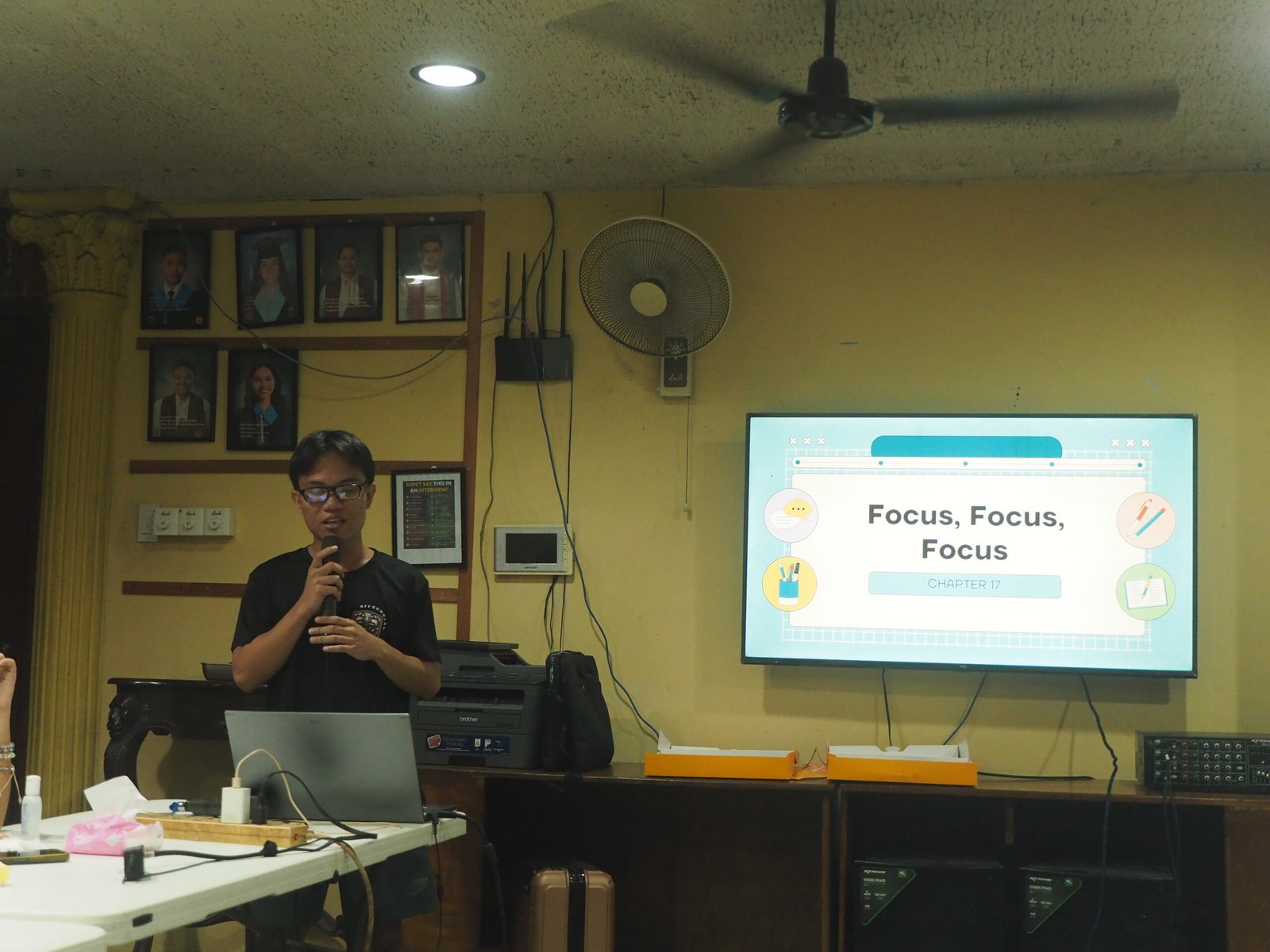

On February 1, 2025, our scholars gathered for another insightful discussion on 𝐂𝐡𝐚𝐩𝐭𝐞𝐫 𝟏𝟕: 𝐅𝐨𝐜𝐮𝐬, 𝐅𝐨𝐜𝐮𝐬, 𝐅𝐨𝐜𝐮𝐬 of the book 𝑹𝒆𝒑𝒆𝒂𝒕 𝒕𝒉𝒆 𝑹𝒆𝒎𝒂𝒓𝒌𝒂𝒃𝒍𝒆: 𝑯𝒐𝒘 𝑺𝒕𝒓𝒐𝒏𝒈 𝑳𝒆𝒂𝒅𝒆𝒓𝒔 𝑶𝒗𝒆𝒓𝒄𝒐𝒎𝒆 𝑩𝒖𝒔𝒊𝒏𝒆𝒔𝒔 𝑪𝒉𝒂𝒍𝒍𝒆𝒏𝒈𝒆𝒔 𝒕𝒐 𝑻𝒂𝒌𝒆 𝑻𝒉𝒆𝒊𝒓 𝑷𝒆𝒓𝒇𝒐𝒓𝒎𝒂𝒏𝒄𝒆 𝒕𝒐 𝒕𝒉𝒆 𝑵𝒆𝒙𝒕 𝑳𝒆𝒗𝒆𝒍. The chapter highlighted that focus is not simply an inherent ability but a skill that can be developed through practice and intentional effort.
The discussion emphasized several key points. First, 𝐅𝐨𝐜𝐮𝐬 is a skill that can be refined through consistent practice. 𝐃𝐢𝐬𝐭𝐫𝐚𝐜𝐭𝐢𝐨𝐧𝐬—whether physical, like noise and people, or mental, like wandering thoughts—hinder productivity, but mental distractions are often the hardest to overcome since our thoughts are always with us. 𝐌𝐮𝐥𝐭𝐢𝐭𝐚𝐬𝐤𝐢𝐧𝐠, despite its appeal, is counterproductive; concentrating on one task at a time leads to better outcomes. A practical tip shared was to jot down unrelated thoughts in a notepad, signaling to the brain that these ideas won’t be forgotten, which helps maintain focus. Additionally, taking restorative breaks, doing nothing to refresh and reset, can significantly enhance concentration and effectiveness.
The discussion served as a reminder that learning to focus is not easy, but with consistent effort, we can train ourselves to concentrate better, thereby increasing our productivity and bringing us closer to achieving meaningful goals. Finally, we extend our heartfelt gratitude to all the scholars who actively participated and shared their insights during the meeting. Special thanks to Ms. Charlyn Joy Obiso for visiting the KFF, we are truly grateful for your support.