
Being the least expensive won’t get you anywhere if the prospect has no confidence to buy. Many times, low price actually scares the buyer.
Jeffrey Gitomer
Last March 29, 2025, the teachers continued discussing about the book 𝐒𝐚𝐥𝐞𝐬 𝐁𝐢𝐛𝐥𝐞: 𝐓𝐡𝐞 𝐔𝐥𝐭𝐢𝐦𝐚𝐭𝐞 𝐒𝐚𝐥𝐞𝐬 𝐑𝐞𝐬𝐨𝐮𝐫𝐜𝐞 𝐈𝐧𝐜𝐥𝐮𝐝𝐢𝐧𝐠 𝐭𝐡𝐞 𝟏𝟎.𝟓 𝐂𝐨𝐦𝐦𝐚𝐧𝐝𝐦𝐞𝐧𝐭𝐬 𝐨𝐟 𝐒𝐚𝐥𝐞 𝐒𝐮𝐜𝐜𝐞𝐬𝐬 by 𝑱𝒆𝒇𝒇𝒓𝒆𝒚 𝑮𝒊𝒕𝒐𝒎𝒆𝒓. This time, we talked about the Book of Presentations and establishing prospect rapport first to make the sales presentation easier and increase buyer confidence.

It reminded us that people are more likely to buy when they feel comfortable, understood, and valued, not just when they see a low price. In fact, as Gitomer points out, low prices can sometimes create doubt or fear rather than trust. Buyers want to feel assured that what they are investing in is worth it, that the value is clear and the relationship is strong.
We also discussed the importance of physically involving the prospect during the presentation as the increase of engagement leads to more sales. Simple things like asking questions, encouraging interaction, or letting them engage with the product or service can turn a passive listener into an active participant. The more engaged a prospect feels, the more likely they are to feel confident in making a decision.
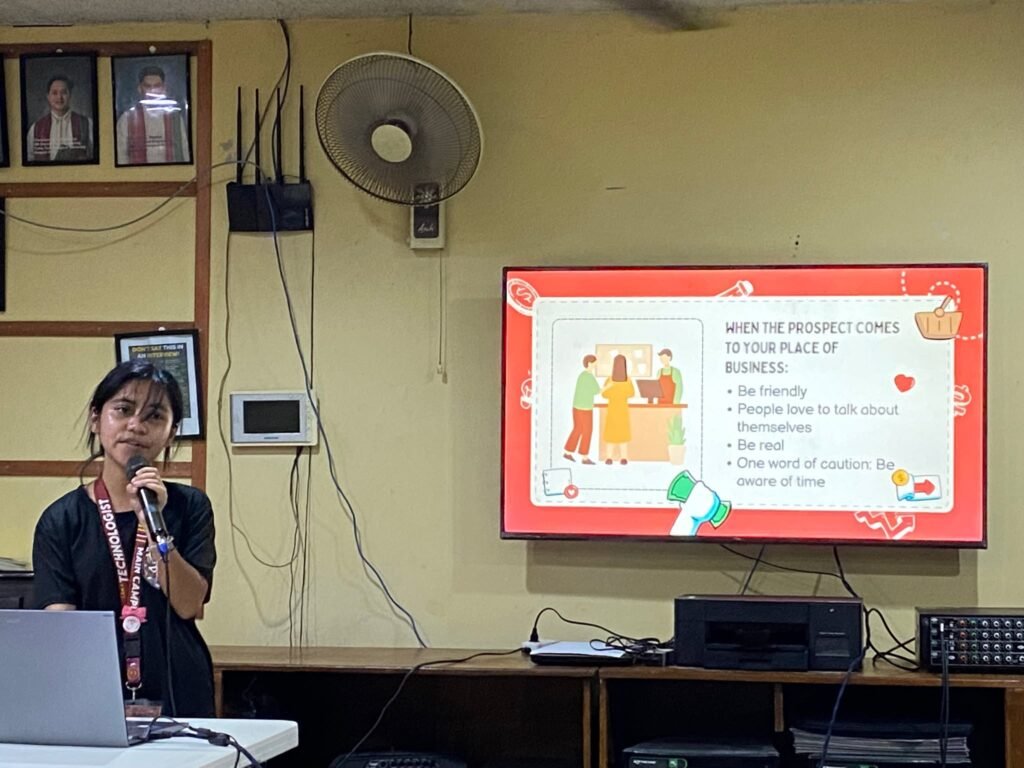
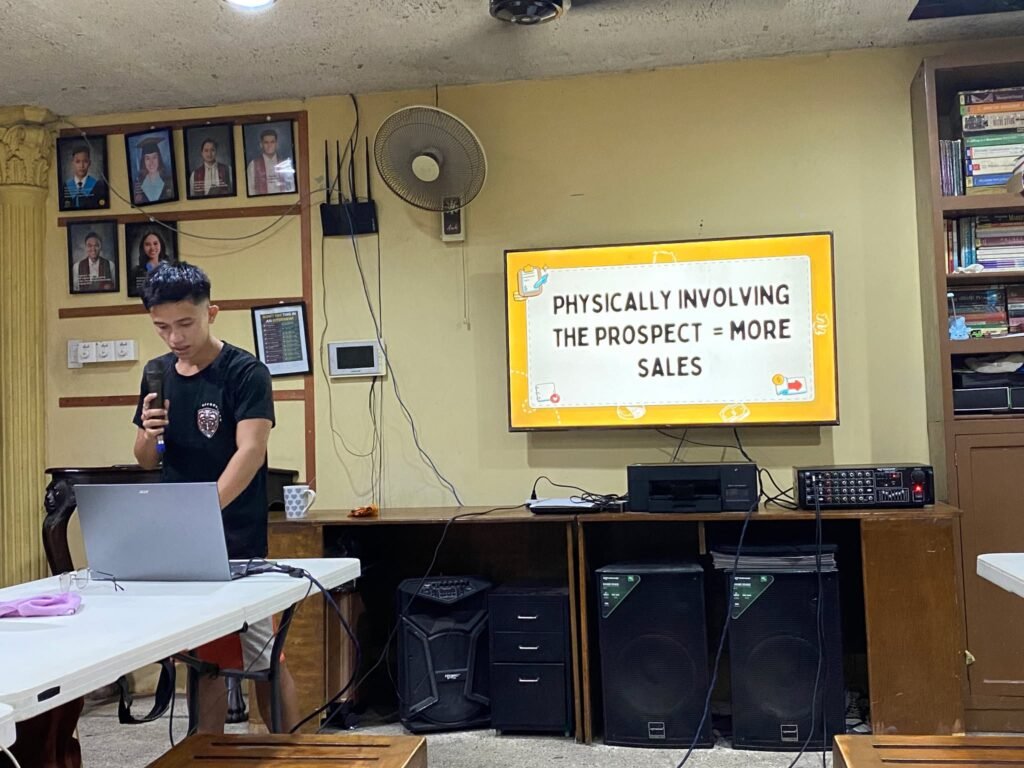

Additionally, effective presentations are shown to be more than data delivery and include engaging stories to avoid what, Gitomer humorously calls “slide show stupidity,” where prospects lose interest because the presentation feels dry or repetitive. Instead, when we weave in stories, humor, and real-life examples, we create a memorable experience that connects with the prospect on a deeper level and keeps the interest of the prospects.
We give out a heartfelt thanks to our teachers for teaching us these extremely valuable lessons and to all who participated in this meeting and shared their insights.
