“𝘐𝘵 𝘵𝘢𝘬𝘦𝘴 𝘥𝘪𝘴𝘤𝘪𝘱𝘭𝘪𝘯𝘦 𝘵𝘰 𝘴𝘢𝘺, “𝘕𝘰, 𝘵𝘩𝘢𝘯𝘬 𝘺𝘰𝘶” 𝘵𝘰 𝘣𝘪𝘨 𝘰𝘱𝘱𝘰𝘳𝘵𝘶𝘯𝘪𝘵𝘪𝘦𝘴. 𝘛𝘩𝘦 𝘧𝘢𝘤𝘵 𝘵𝘩𝘢𝘵 𝘴𝘰𝘮𝘦𝘵𝘩𝘪𝘯𝘨 𝘪𝘴 𝘢 “𝘰𝘯𝘤𝘦-𝘪𝘯-𝘢-𝘭𝘪𝘧𝘦𝘵𝘪𝘮𝘦 𝘰𝘱𝘱𝘰𝘳𝘵𝘶𝘯𝘪𝘵𝘺” 𝘪𝘴 𝘪𝘳𝘳𝘦𝘭𝘦𝘷𝘢𝘯𝘵 𝘪𝘧 𝘪𝘵 𝘥𝘰𝘦𝘴𝘯’𝘵 𝘧𝘪𝘵 𝘸𝘪𝘵𝘩𝘪𝘯 𝘵𝘩𝘳𝘦𝘦 𝘤𝘪𝘳𝘤𝘭𝘦𝘴.”
Last January 10, 2026, the KFF scholars have continued discussing the 𝑪𝒉𝒂𝒑𝒕𝒆𝒓 7 of the book of “𝐆𝐨𝐨𝐝 𝐓𝐨 𝐆𝐫𝐞𝐚𝐭” 𝐛𝐲 𝐉𝐢𝐦 𝐂𝐨𝐥𝐥𝐢𝐧𝐬. Truly it has been a great journey as we absorbed new knowledge not only about business but also preparing ourselves to become leaders.
This chapter, however, introduced a new concept to us: the 𝐂𝐮𝐥𝐭𝐮𝐭𝐫𝐞 𝐨𝐟 𝐃𝐢𝐬𝐜𝐢𝐩𝐥𝐢𝐧𝐞 concept. This ideas has been discussed alongside the Hedgehog concept from the previous chapter which circles around the three circle:
(1) What you are deeply passionate about
(2) What you can be the best in the world at, and
(3) What drives your economic engine

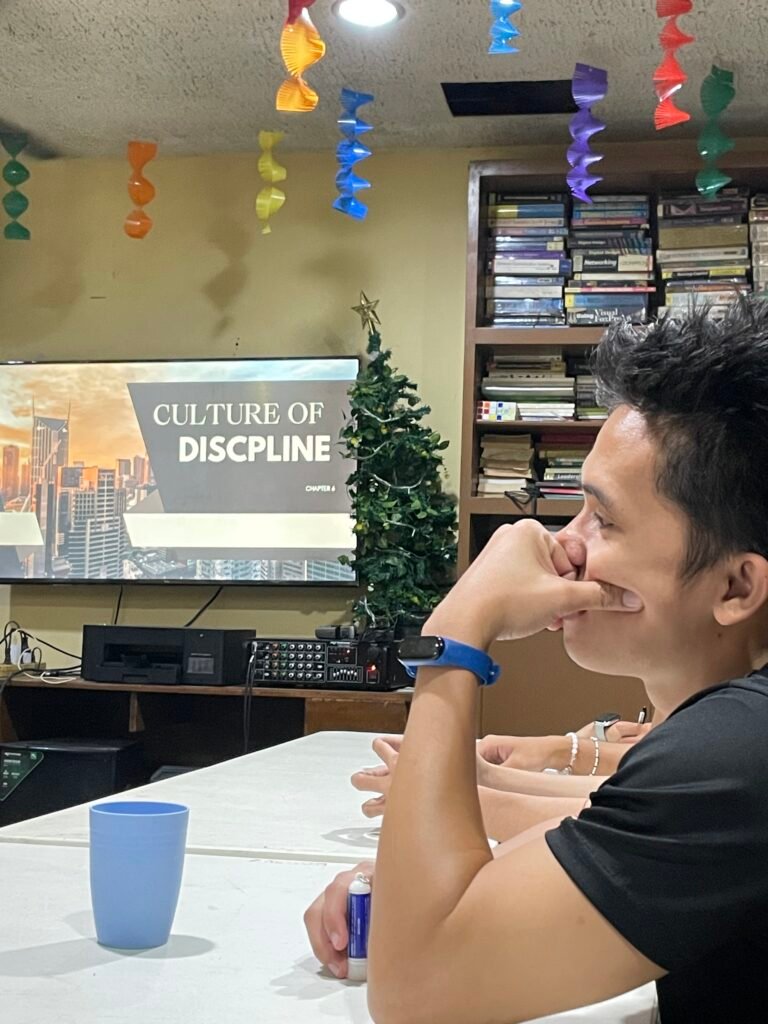
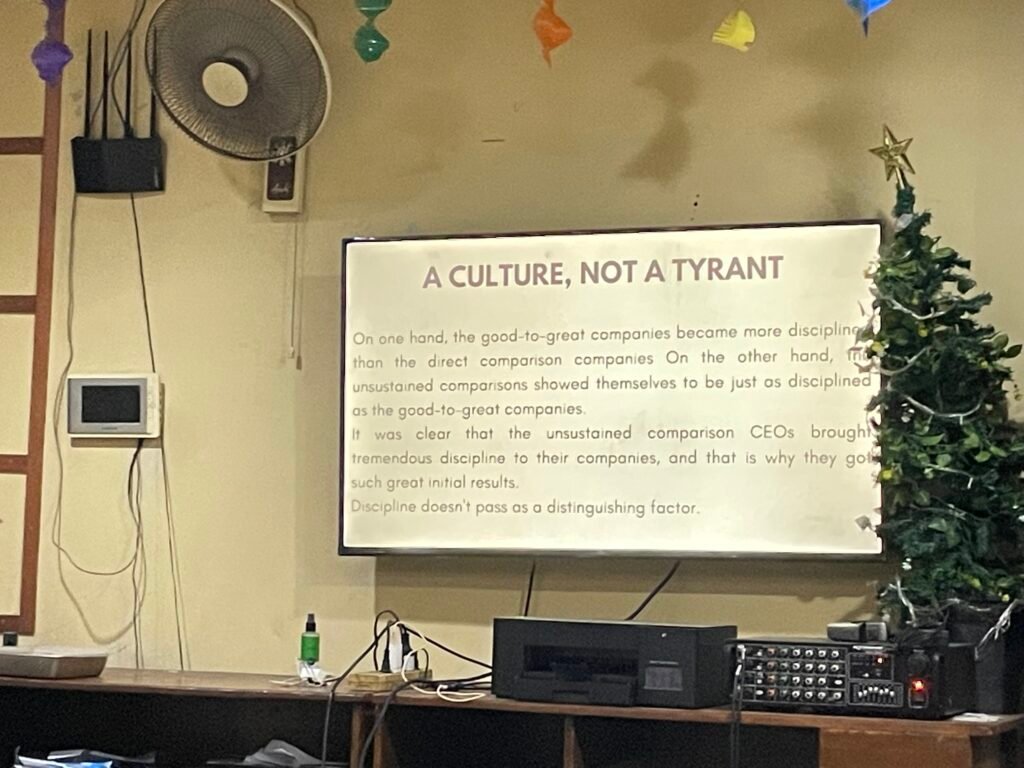
These circles would not be stable without the presence of discipline. 𝐃𝐢𝐬𝐜𝐢𝐩𝐥𝐢𝐧𝐞 acts as a guide to stay in the circle. However, there are conditions that this discipline must follow, for instance, using discipline as a culture and not a tyrant.
Culture is an embodied concept followed by a group of people or community. It becomes part of life in which we respect and follow. In business, discipline must be a culture in a way where it stand not as superior or a force to put an employee in a very uncomfortable workplace but as a culture where it is natural thing that exist in the workplace. A discipline where everyone must stay on the track, on the three circles and not the other way around.
This idea follows the 𝑯𝒆𝒅𝒈𝒆𝒉𝒐𝒈 𝒄𝒐𝒏𝒄𝒆𝒑𝒕 which is essential in business. People can change their mind and not everyone can tell if they are going in the right place or in their right circle. That’s why the Hedgehog concept emphasizes discipline when people begin operating the three circles, but how would they stay in that circle?



According to Jim Collins, even if the world offers many opportunities but if it doesn’t fit the three circles, it wouldn’t work. However, this raises another question from the scholars, that if you don’t try the opportunities how would you know if it doesn’t fit your three circle? This conversation sparked a debate within the room since both idea has a point.



Is too much trying good or bad?
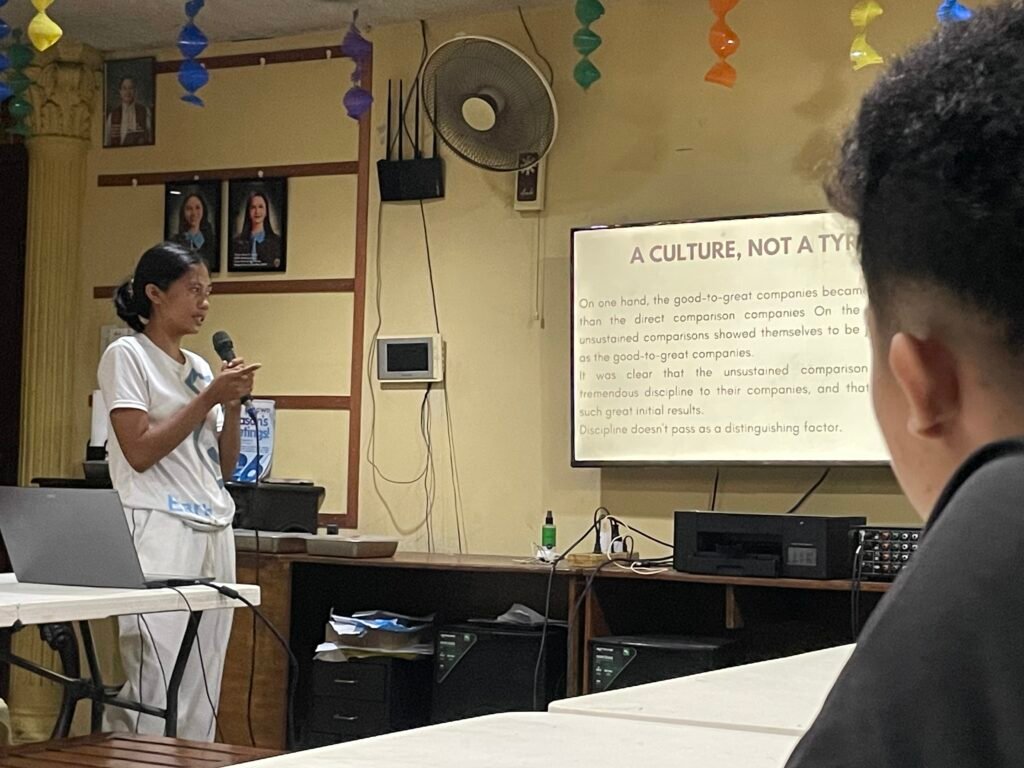
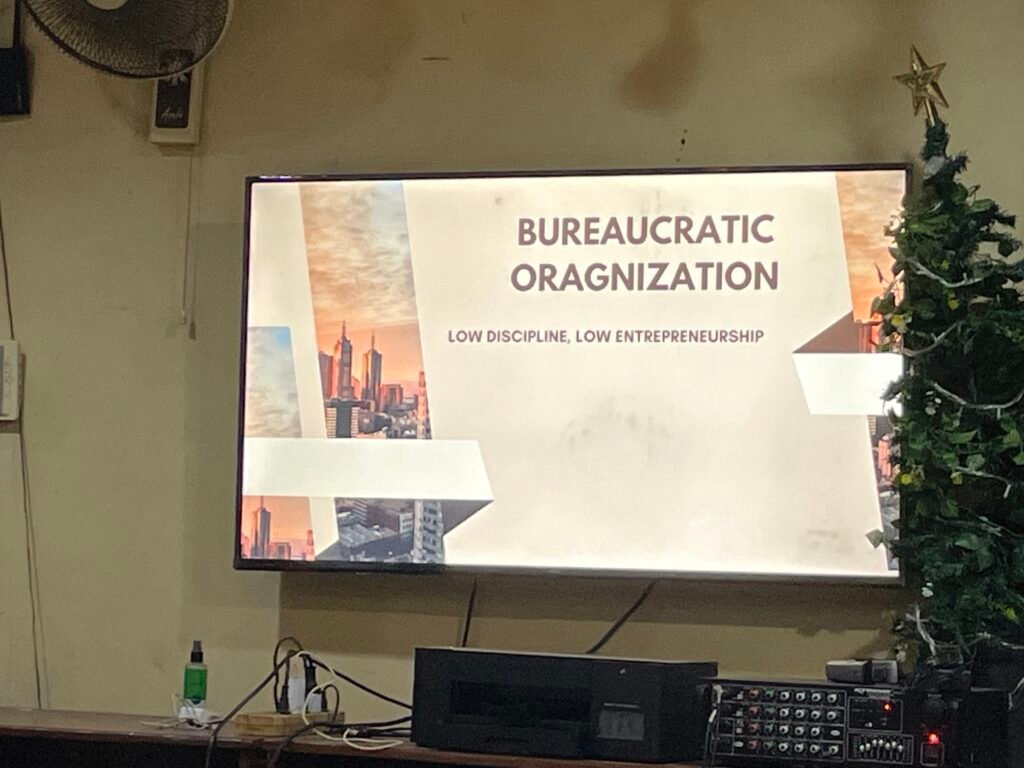
Finally, this discussion allow us to stand with our beliefs and to follow what we feel is good for us. That we hope it reaches yours too.
We would like to thank all the scholars who took the time to listen as well to the teachers and to Sir Kenneth for the insightful advices and stories. You have made this meeting truly a meaningful one. Thank You!